Underwater Inspection Training: Technical Skills in Practice
Underwater inspection requires more than the ability to work beneath the surface. Inspectors need to combine commercial diving skills with inspection techniques, equipment knowledge and the ability to accurately record and assess what they find.
Following our previous feature on careers in underwater inspection, this latest article takes a closer look at the technical training behind the qualifications — and at the practical environment where candidates develop those skills.
This year, TWI Training has captured in-depth talk with Underwater Programme Manager, Marek Wojcik, providing a closer look at underwater inspection training at TWI.
We give you an insight into the practical side of training at TWI's Middlesbrough facility, where candidates can develop their inspection skills in a dedicated diving environment.
For an NDT Inspection Diver, the ability to carry out an inspection is only part of the process. Candidates need to understand how inspection techniques are applied underwater, how findings are recorded and how inspection information can be used to assess the condition of subsea structures and components.
The CSWIP 3.1U – NDT Inspection Diver course introduces candidates to a range of underwater inspection techniques, including visual inspection, underwater video and photography, cathodic protection measurements and ultrasonic digital thickness measurement.
It is this combination of technical knowledge and practical application that forms the foundation of underwater inspection competence.
The practical environment is particularly important because underwater inspection presents challenges that are different from those encountered during topside inspection.
Candidates must work with inspection equipment while underwater, maintain an accurate approach to inspection and produce reliable information from what they observe.
Training therefore goes beyond simply understanding how an inspection method works. Candidates develop the ability to apply techniques in an underwater environment, building the practical competence required for inspection work.
For those preparing to enter or progress within underwater inspection, the CSWIP 3.1U – NDT Inspection Diver Package provides a route into this specialist area.
Upcoming 3.1U packages at TWI Training's Middlesbrough facility are scheduled for:
| 28 September 2026 |
| 05 October 2026 |
| 26 October 2026 |
| 23 November 2026 |
For experienced inspection divers looking to develop their technical capability further, the CSWIP 3.2U – NDT Inspection Diver Package builds on the foundation established at 3.1U.
The 3.2U training moves into more advanced underwater NDT, including techniques such as magnetic particle inspection, weld toe grinding and electro-magnetic techniques. The course is designed for candidates who already have the relevant 3.1U qualification and want to develop their underwater inspection capability further.
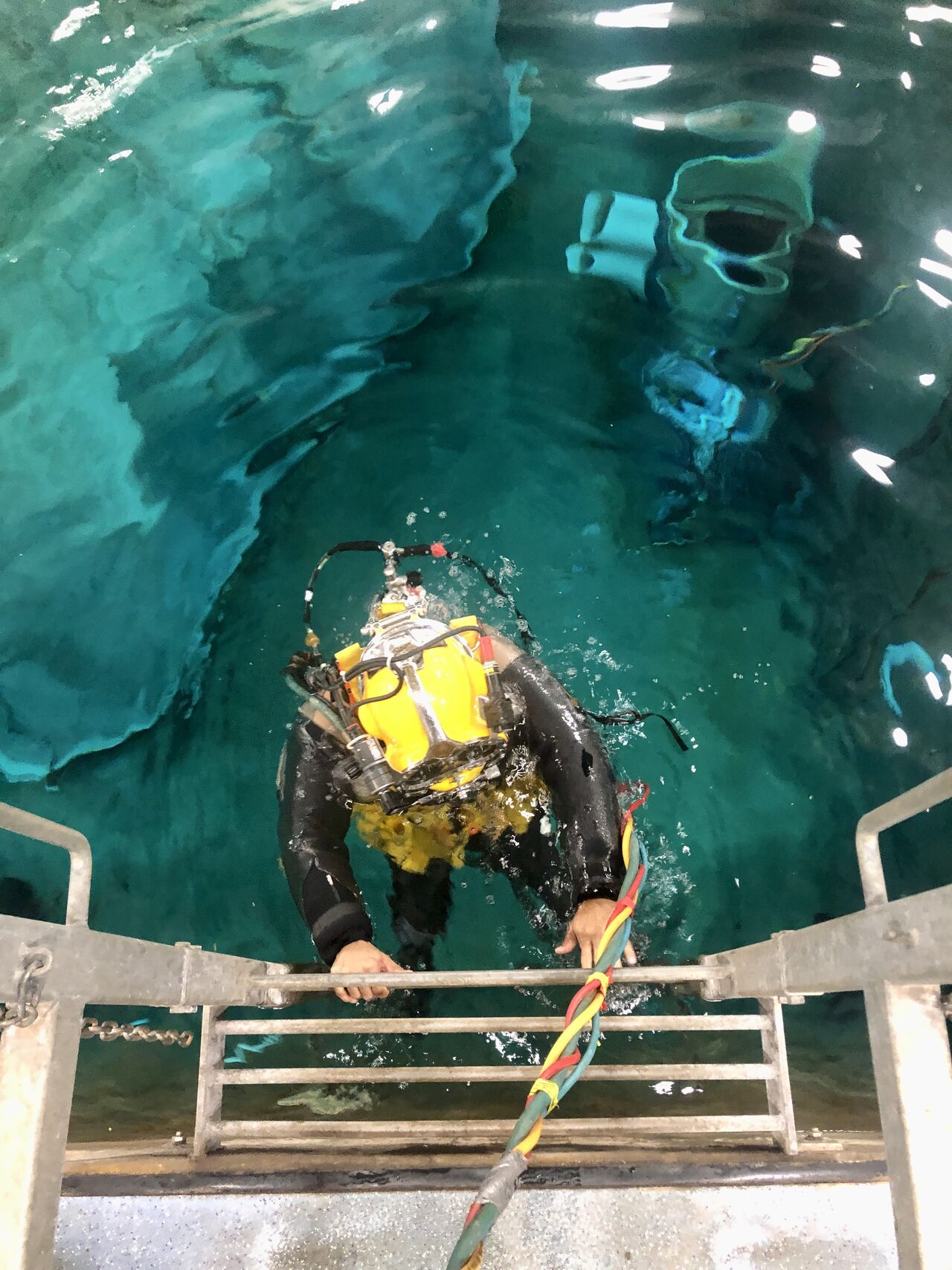
This progression illustrates an important aspect of underwater inspection training: technical competence develops alongside practical experience.
Upcoming CSWIP 3.2U – NDT Inspection Diver Packages at Middlesbrough are scheduled for:
| 12 October 2026 |
| 02 November 2026 |
From Inspection Skills to Professional Certification
The training provides candidates with structured development towards CSWIP certification, subject to meeting the relevant certification and examination requirements.
For professionals working in offshore and subsea inspection, recognised qualifications can form an important part of demonstrating technical competence and developing their professional capability.
But underwater inspection does not stop with diver-based inspection. The 3.1U and 3.2U courses form part of TWI's wider underwater inspection programme.
Beyond diver inspection, the programme also includes:
This route focuses on remotely applied subsea inspection, including areas such as CCTV, equipment calibration, cathodic protection systems, quality assurance and the interpretation and recording of inspection information.
For professionals moving towards planning and coordination, 3.4U develops skills in areas including advanced NDT, data recording and processing, quality assurance, inspection planning and briefing.
These qualifications are not necessarily a single route that every professional must follow. As we explored in our previous article, different qualifications suit different backgrounds, responsibilities and career directions.
From the diving station to the inspection equipment and underwater activities, our programme manager, Marek talks about how technical knowledge is translated into practical inspection work.
For candidates considering a career in underwater inspection, seeing the training environment can provide a useful perspective on what the courses involve and the technical skills they are designed to develop. If you are beginning your development as an NDT Inspection Diver or looking to build on existing underwater inspection experience, TWI Training offers a range of CSWIP programmes at its Middlesbrough facility.
For deeper dive into knowing about your eligibility and entry requirements, you can always contact us. Explore TWI's Topside and Underwater Inspection courses and find the programme that aligns with your existing experience and professional development goals.